Lucky Pinball at Xjwin: an Arcade Machine That Still Runs on Probability
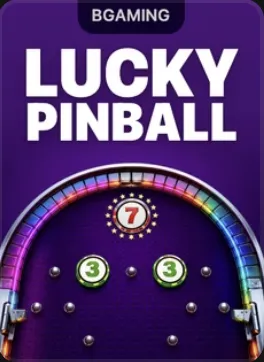
Lucky Pinball looks like it was lifted straight from an amusement arcade. The banner shows the top arc of a pinball table lit with neon rainbow rails, a deep purple playfield dotted with steel pins, and round bumpers marked with a lucky 7 and two 3s. There are no characters and no story — just the machine. That makes it the most "mechanical" looking of the eight titles Xjwin features, and it invites a question worth answering before you play: how much of what you see is actually deciding the result?
Open Lucky Pinball at XjwinThe ball looks physical; the result is not
In a real pinball machine, flippers, angles and timing matter. In an online casino game styled as pinball, the outcome of each round is decided by a random number generator, and the bouncing ball is an animation that shows you a result already drawn. We have not verified exactly how Lucky Pinball converts a round into a payout — whether through reels, a ball-drop path, bumper hits or something else — but in every certified casino game the principle is the same: you cannot aim, nudge or time your way to a better outcome. If the game offers any button that looks like skill, check in the rules whether it changes the result or only the animation.
Same idea as a roulette ball
A live roulette ball is a useful comparison. It really does bounce, yet every pocket on a European wheel has the same 1-in-37 chance, and the house edge comes from paying 35 to 1 on a single number instead of 36 to 1. A pinball-styled game works on the same logic: the bounces are entertainment, the edge is built into the paytable. The difference is that at the roulette table you can calculate the edge yourself, while in Lucky Pinball you rely on the return-to-player figure printed in the information panel.
What to read before the first drop
- How a win is formed. Does the payout depend on where the ball lands, which bumpers it hits, or on symbols elsewhere on screen? The paytable says.
- Return to player and volatility. Read them in the rules panel; we do not publish them because we have not confirmed them.
- Risk settings. Some arcade-style games let you choose a risk level that reshapes the payouts. If such a setting exists, read how each level changes the spread of results.
- Autoplay controls. Fast arcade rounds plus autoplay can spend a budget very quickly. Set loss limits in the autoplay menu if it offers them.
Pacing a fast game
Arcade-style rounds often take only a few seconds. That pace is the real budget risk: 300 rounds at 1 unit pass much faster than 300 hands of blackjack. A simple rule in units: decide a total (say 80 units), a stake (0.4 units gives about 200 rounds of runway), and a time limit. Stop at whichever comes first.
If you like the arcade feel, Aviatrix Fortunes is the other title with a playful, non-traditional look; for something you can calculate by hand, try the table games guide.