Duck Hunters 2 at Xjwin: Don't Assume the Sequel Plays Like the First One
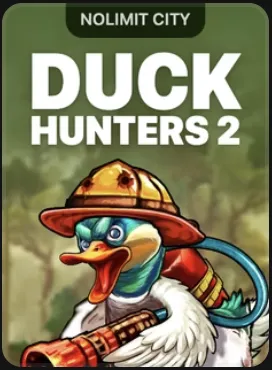
The Duck Hunters 2 banner flips the usual hunting picture: the hunter is the duck. A cartoon mallard in a battered, dented helmet carries a chunky gun fed by a hose, glaring out of a dense jungle-green background. The tone is comic and a little chaotic. The "2" tells you this is a sequel, and that single digit is the most important thing to think about before you play.
Find Duck Hunters 2 at XjwinWhat a sequel inherits — and what it doesn't
Players who liked an original game often assume the sequel shares its maths. That is a risky assumption. Studios use sequels to keep a theme and a character while changing almost everything underneath: grid size, pay system, feature triggers, return to player and volatility. Sometimes the second game is calmer, sometimes it is far more extreme. We have not verified the specification of Duck Hunters 2, and we deliberately do not borrow figures from any earlier title — they would not describe the game in front of you.
A checklist for the rules screen
| Item | Where to find it | Why it matters |
|---|---|---|
| Return to player | Information / rules panel | Long-run share of stakes paid back |
| Volatility | Rules panel, if stated | How uneven the wins are |
| Pay system | Paytable | Lines, ways or clusters change how wins form |
| Bonus trigger | Feature description | How often the main feature can appear |
| Maximum win | Paytable footnote | The cap on any single round |
Read the list once in full. If the game describes itself as highly volatile, expect long runs with little or nothing and plan your stake accordingly.
Sizing a session for a possibly volatile game
Games with comic, action-heavy themes are often built around big features, and big features usually mean long gaps between them. If the rules confirm high volatility, a practical approach in neutral units is to plan for at least 150–200 rounds of runway: with a 100-unit budget, that means a stake of around 0.5 units. If you would rather play fewer rounds at a higher stake, accept in advance that the session may end before any feature appears. Write the stopping point down — both the loss limit and a win level at which you leave.
Odds thinking, applied to a slot
A sports bettor compares a price with a probability. You cannot do that with a slot round by round, but you can with the session: 100% minus the RTP is the expected cost per unit staked over the long run. If you stake 200 units in total during an evening, multiply by that percentage to see what the evening is expected to cost on average. It will rarely be exactly that, but it frames the game as entertainment with a price rather than as a way to earn.
For other featured titles with a strong cartoon style, see Yo Ho Ho 2048 and Wincent Wolf.